
Depravity
Play Depravity
Depravity Screenshots












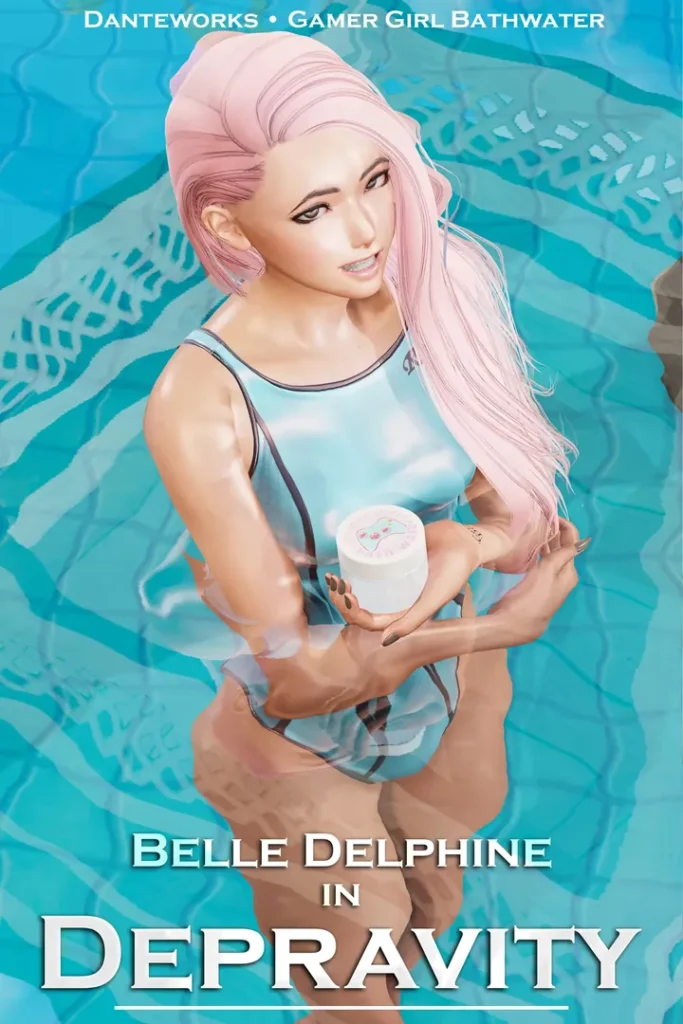















Depravity review
Explore the narrative-driven mechanics, character choices, and immersive world of this mature interactive experience
Depravity stands out in the adult gaming landscape as a narrative-driven experience that combines complex storytelling with player agency. This mature interactive game immerses players in a richly detailed world where choices carry weight and consequences shape your journey. Whether you’re interested in understanding the game’s intricate plot, exploring its character-driven mechanics, or learning about the various gameplay systems, this guide provides everything you need to know about what makes Depravity a compelling experience for adult gamers seeking depth beyond surface-level content.
Understanding Depravity’s Core Gameplay Mechanics
Ever felt like a game’s rules were working against you, making it impossible to truly express the story you wanted to tell? 😤 I remember booting up Depravity for the first time, expecting a linear visual novel, and being completely blindsided. Instead of just clicking through dialogue, I was immediately thrust into a high-stakes trivia battle about obscure mythology, my character’s fate hanging on my ability to recall ancient gods. I lost, badly. But that loss wasn’t an end—it was a fascinating beginning that reshaped my entire story. That’s the magic of Depravity gameplay mechanics. It’s not just about what you do; it’s a complex web of interactive game challenges, strategic point accumulation, and player choice consequences that makes every playthrough uniquely yours.
This chapter is your deep dive into the engine room of this intense experience. We’ll strip down the challenge system adult game fans rave about, map out the point progression system that governs your rise or fall, and decode how every decision you make sends ripples through the narrative. Let’s get started. 🕵️♂️
How the Challenge System Works
At its heart, Depravity is a relentless proving ground. The world operates on a simple, brutal premise: perform or perish. The challenge system adult game structure is the primary vehicle for this, serving as the crucible where characters are tested, alliances are broken, and your path is defined. Think of it less as a series of mini-games and more as narrative checkpoints with tangible, gameplay-driven outcomes.
Each episode typically revolves around a central challenge, but the game brilliantly keeps you on your toes with unpredictable side tasks and social maneuvering. Your performance isn’t just about winning; it’s about how you win, who you impress, and what sacrifices you’re willing to make. The system evaluates you constantly, creating a living leaderboard system gameplay that everyone in the house is acutely aware of. I learned this the hard way when I focused solely on beating a physical obstacle course. I came in first, but I’d ignored my partner during a teamwork segment. The game gave me the points, but my social standing plummeted, locking me out of crucial information later. It’s a masterclass in multi-layered game progression mechanics.
The challenges themselves are beautifully varied, preventing any single skill set from dominating. You might be a trivia genius but crumble under physical pressure, or be a social savant who freezes during a logic puzzle. This variety ensures that the Depravity gameplay mechanics stay fresh and force you to role-play authentically. Is your character a cunning strategist or a brute-force powerhouse? The challenges will reveal the truth.
Here’s a breakdown of the primary challenge types you’ll encounter:
| Challenge Category | Core Mechanics | Success Conditions | Typical Point Reward |
|---|---|---|---|
| Mental & Trivia | Multiple-choice questions, puzzle-solving, memory games, and logic riddles. Often tied to the game’s lore or current social dynamics. | Correct answers, fastest completion time, or achieving a specific puzzle solution. | High Knowledge Points, moderate Influence Points. |
| Physical & Endurance | Timed obstacle courses, strength-based tasks, endurance holds, and precision challenges. These test your avatar’s physical stats. | Finishing within the time limit, outperforming opponents in head-to-head tasks, or simply lasting the longest. | |
| Social & Persuasion | Dialogue trees, negotiation scenarios, alliance-building, and charisma checks. You must read other characters and choose your words carefully. | Gaining a character’s trust, brokering a deal, or successfully lying or persuading without being detected. | High Influence Points, variable Favor Points with specific characters. |
| Creative & Performance | Artistic tasks, improvisational acting, crafting items from limited resources, or putting on a show for judges. | Judges’ approval (often other characters), audience reaction score, or meeting specific creative briefs. | Variable points across Creativity, Influence, and unique rewards like special items. |
🎯 Pro Tip: Never neglect the social layer during any challenge. Even in a solo physical task, who you cheer for, who you trash-talk, or simply your reaction to others’ performances is being logged by the game’s hidden evaluation system. Your reputation is a currency that spends just as easily as points.
The evaluation after each challenge is a tense, cinematic experience. The game doesn’t just show a score—it shows rankings, the disappointed or smug faces of your rivals, and often, private feedback from the mysterious overseers of the game. This moment is where the leaderboard system gameplay becomes painfully personal. Seeing your name in the bottom half isn’t just a blow to your ego; it can mean losing first pick of rooms, getting the worst chore duty, or becoming a target for elimination. It’s this direct link between performance, social standing, and tangible in-game penalties that makes the challenge system adult game so compelling and stressful in the best way possible. 😅
Character Progression and Point Systems
If challenges are the tests, then the point progression system is your report card. This isn’t a simple experience bar that you mindlessly fill. Depravity employs a sophisticated, multi-currency economy that directly shapes your capabilities, relationships, and narrative options. You’re not just “leveling up”; you’re strategically investing in the person you want your character to become.
The primary currencies you’ll be managing are:
- Prestige Points (PP): The gold standard. These are earned from winning or placing highly in main challenges. PP determines your overall rank on the public leaderboard, your eligibility for the finals, and your buying power for major advantages or luxury items. Think of this as your “public clout” score.
- Skill Tokens (ST): Earned by demonstrating specific competencies during challenges (e.g., “Brute Force,” “Silver Tongue,” “Keen Mind”). You spend these to permanently unlock or upgrade abilities in your character’s skill tree, allowing you to specialize. Found a puzzle you couldn’t solve? Investing ST in “Logic” might give you a hint next time.
- Favor Points (FP): This is relationship-specific currency. You earn FP with individual characters by helping them, choosing them as partners, sharing secrets, or supporting them in conflicts. High FP unlocks exclusive dialogue, romance paths, and crucial assistance during challenges. I once saved up enough FP with the tech-genius character to get her to sabotage a rival’s equipment before a race—a game-changing move that wasn’t available on any menu, just through relationship building. 🤝
- Shadow Credits (SC): The black market currency. Earned through covert actions, discovering secrets, or making morally dubious deals. SC is used to purchase information, blackmail materials, or direct interventions that bypass the official game rules.
This multi-faceted point progression system creates constant, delicious tension. Do you spend your Skill Tokens to shore up a physical weakness, or double down on your mental strength to dominate trivia? Do you use your hard-earned Prestige Points to buy a comfort item for yourself, or a gift to boost Favor Points with a powerful ally? Every allocation is a statement of intent.
The game progression mechanics here are genius because they’re non-linear. You won’t find a single “right” build. On one playthrough, I created a charming manipulator who was physically weak but never won a challenge directly—he always had an ally do it for him. Another time, I built a solitary powerhouse who ignored social links and bulldozed through every physical task. Both reached the late game, but the world, its challenges, and the available story branches were completely different. Your point progression system strategy literally rewrites the game’s landscape.
💡 Personal Insight: Don’t try to be a jack-of-all-trades on your first run. The Depravity gameplay mechanics reward specialization. Pick two core skills and one primary ally to invest in deeply. This focused approach will open more definitive story paths than a scattered, mediocre investment across the board.
Decision-Making and Consequence Framework
This is where Depravity transcends from a great game to an unforgettable narrative experience. Every choice, from a major moral dilemma to a seemingly throwaway comment during breakfast, carries weight. The player choice consequences system is a sprawling, hidden web that remembers everything. It’s less about “good vs. evil” and more about “cunning vs. honest,” “selfish vs. loyal,” or “emotional vs. logical.”
The consequences manifest in several key ways:
- Branching Story Paths: Major decisions create clear narrative forks. Choosing to expose a secret during a public ceremony will catapult you down a path of confrontation and intrigue, while keeping it for private leverage leads to a subtler, more manipulative storyline. There is no “default” path.
- Relationship Calculus: Every interaction is logged. Snub a character who offers you help, and they will not only refuse you later but might actively campaign against you. I once made a sarcastic remark to a quiet character I thought was unimportant, only to find out later he was the vote that sent me into a deadly elimination challenge. The game’s social dynamics are a constant, living puzzle. 🧩
- Challenge Modification: Your past choices directly alter future interactive game challenges. If you’ve been cruel to a character who ends up designing a challenge, they might rig it against you. Conversely, if you saved someone from elimination, they might slip you a crucial clue. The game world reacts to your reputation.
- The Final Reckoning: The game’s finale isn’t a final boss battle; it’s a cascading series of revelations and confrontations based on every alliance you’ve made, every enemy you’ve created, and every secret you’ve uncovered or buried. The player choice consequences culminate in a finale that feels uniquely earned—or deserved.
The system’s brilliance is in its subtlety. You often won’t see the consequence of a choice until hours later, making the world feel authentically reactive rather than gamified. A small act of kindness in Episode 2 might mean a character risks their life to warn you of an ambush in Episode 7. This long-term cause-and-effect is the core of the Depravity gameplay mechanics, encouraging deep role-playing and emotional investment.
The evaluation system that determines elimination is the ultimate expression of this framework. It’s not purely based on your leaderboard rank. The game’s overseers are evaluating narrative potential and entertainment value. A consistently low-ranked player who creates shocking drama or forms a compelling underdog story might be spared over a boring, mid-ranked competitor. This means you can sometimes game the system not by scoring points, but by being strategically interesting—a meta-layer that perfectly fits the game’s themes.
Ultimately, understanding Depravity’s core mechanics is about embracing a simple truth: you are never just playing a game. You are managing a portfolio of skills, curating a web of relationships, and authoring a biography through every action. The challenge system adult game provides the stage, the point progression system provides the tools, and the player choice consequences provide the indelible ink with which your story is written. Your journey through its world is a direct reflection of your own strategic mind and moral compass. Now, go make your mark. The leaderboard is waiting. 🏆
Depravity represents a sophisticated approach to adult gaming by prioritizing narrative depth, meaningful player choices, and thematic complexity alongside its mature content. The game’s challenge-based progression system keeps players engaged through varied gameplay mechanics, while its morally nuanced story and reactive world create an experience that extends beyond surface-level entertainment. With customizable characters, multiple faction alignments, and consequences that shape your journey, Depravity offers substantial replay value for players seeking a thought-provoking interactive experience. Whether you’re drawn to the intricate storytelling, the strategic gameplay systems, or the opportunity to explore complex ethical questions, Depravity delivers a comprehensive adult gaming experience that respects player intelligence and agency.